A peer-to-peer (P2P) video conferencing application built with the MERN stack (MongoDB, Express, React, Node.js). This app provides real-time video communication, chat messaging, and screen sharing using WebRTC, with signaling handled via a Node.js backend.
- Live App : videogo.jayyu.in
- Demo Video : Drive Link
- Repository : jayesh-verma-code/VideoGo
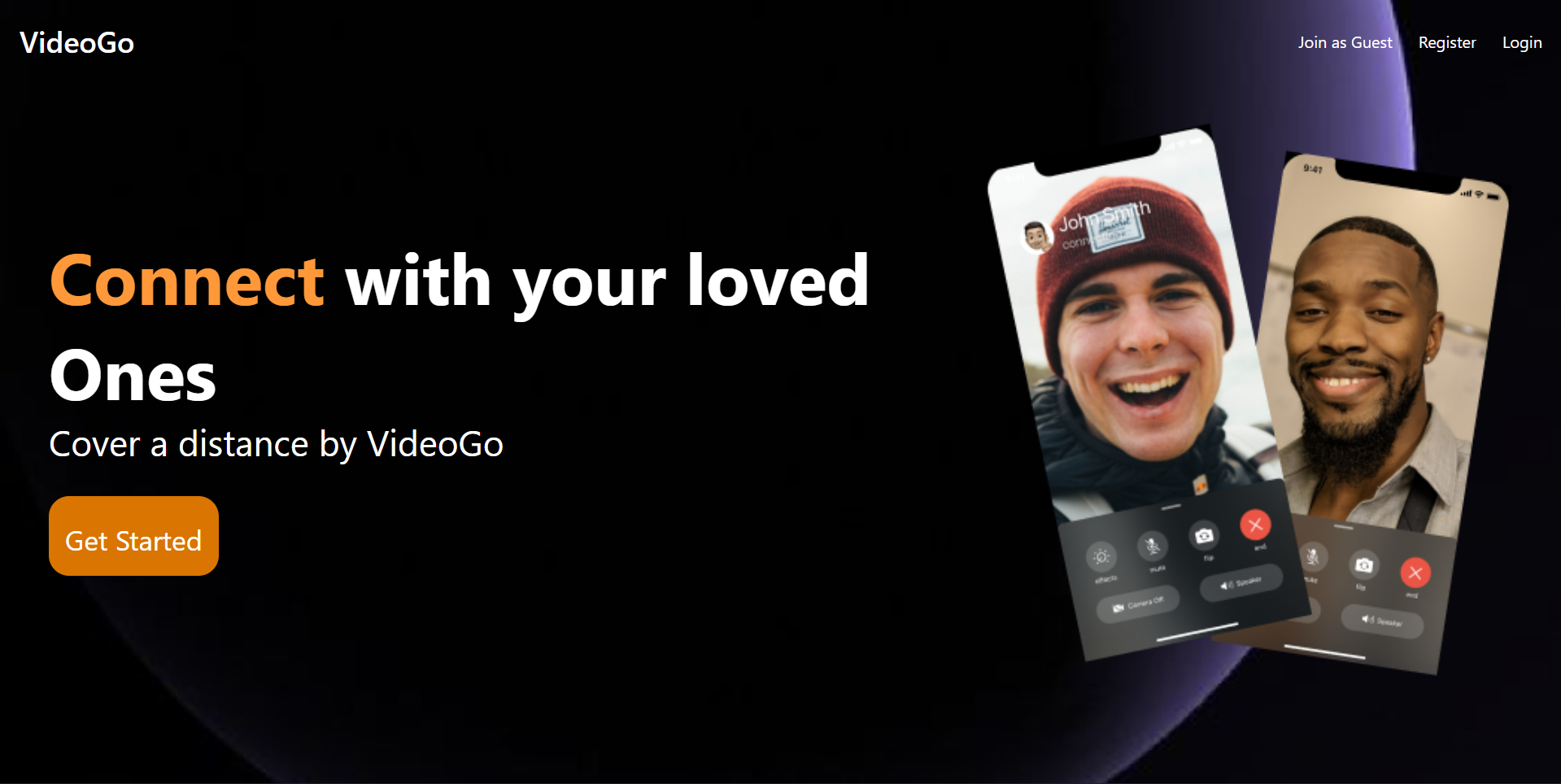
- Peer-to-peer video/audio calling using WebRTC
- Real-time text chat
- Screen sharing
- Room-based conferencing
- Scalable signaling server using WebSockets (Socket.IO)
- Responsive UI built with React
- Deployment-ready setup (Vercel + Render)
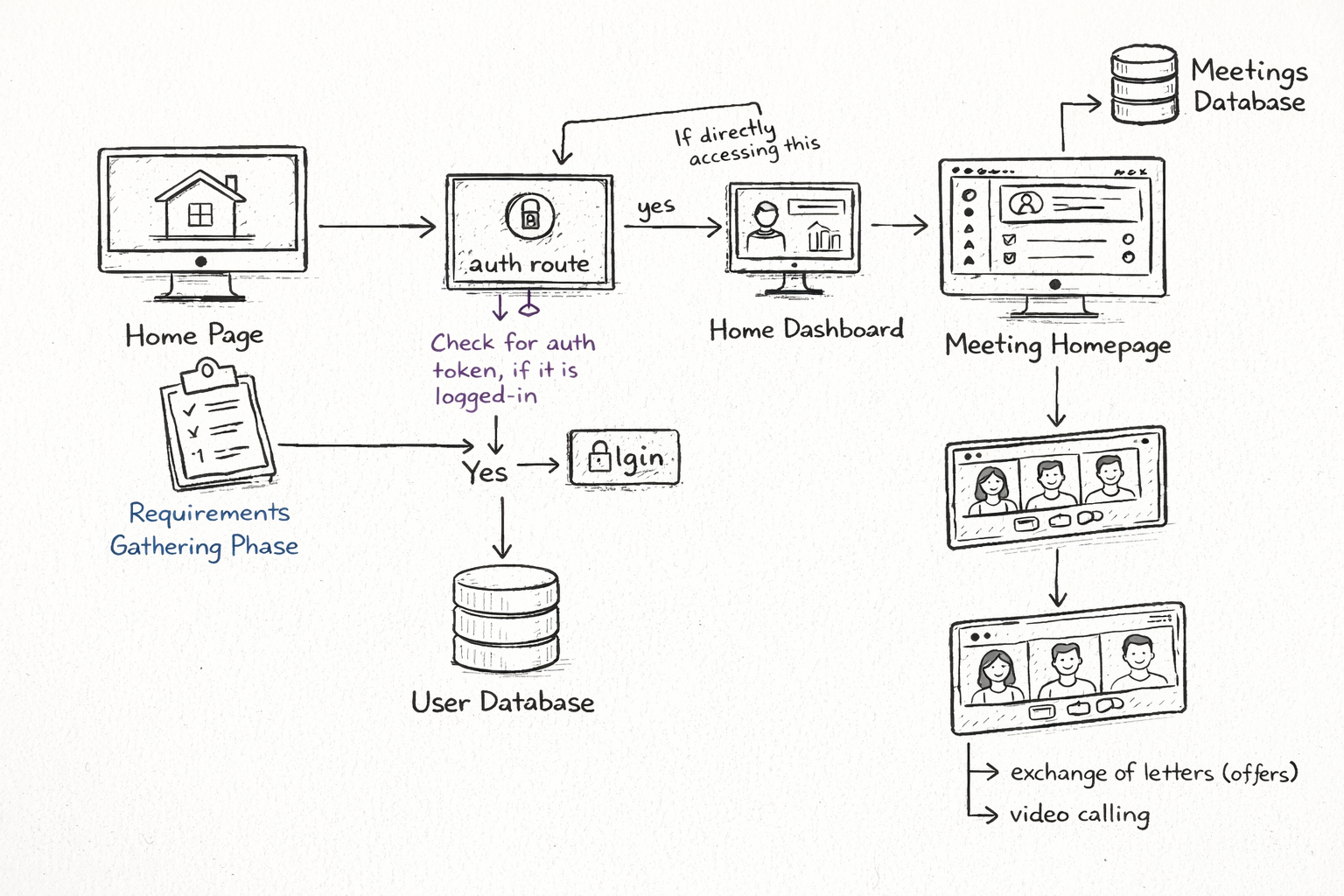
| Components | Technologies |
|---|---|
| Database | MongoDB |
| Backend | bcrypt, crypto, Socket.io, ExpressJS/NestJS/Fastify |
| Frontend | ReactJS, CSS3, WebRTC, Axios, Material UI |
Socket.io smartly switchs between WebRTC to Long polling for reducing system failure.
VideoGo/
│
├── frontend/                # React frontend
│   ├── src/
│   ├── public/
│   └── package.json
│
├── backend/                # Node/Express backend
│   ├── controllers/
│   ├── routes/
│   ├── socket/
│   └── package.json
│
├── README.md
- Node.js (v16+ recommended)
- npm or yarn
- MongoDB (local or cloud instance)
git clone https://github.com/jayesh-verma-code/VideoGo
cd VideoGo
cd backend
npm install
Create a .env file in the server directory:
PORT=8000
MONGO_URI=your_mongodb_connection_string
Start the backend:
npm run dev
cd frontend
npm install
Create a .env file in the client directory:
REACT_APP_SERVER_URL=http://localhost:8000
Start the frontend:
npm start
- P2P architecture may not scale well for large groups
- Network/firewall restrictions may affect connectivity
- No TURN server may cause issues in restrictive networks